Structured Literacy Coaching for All Kinds of Learning Brains: Limited 2025–2026 Slots Available

Instructional Reading Assessments

Assessment Overview

At Reading with Ms. Joy, all assessments are tailored to support each student’s individual reading journey. I use a variety of informal and formal educational screeners to help identify skill gaps, monitor progress, and inform instruction. These tools are designed to support lesson planning and track student growth in areas such as phonological awareness, decoding, and spelling.

Some assessments are included at no additional cost, while others may involve a small fee depending on the student’s needs and the tools required.

⚠️ Please note: These assessments are not formal diagnostic evaluations and do not provide a diagnosis of dyslexia or any other learning difference. They are strictly used for instructional planning and do not replace psychoeducational or neuropsychological evaluations provided by licensed professionals.

My goal is to make effective literacy support accessible and affordable, while empowering families with the information they need to support their child’s learning. I look forward to partnering with you on this personalized learning journey!
The reading abilities of young people in the same grade at school can vary just as much as their shoe sizes. Each student brings different skills, backgrounds, and motivations to the act of reading.

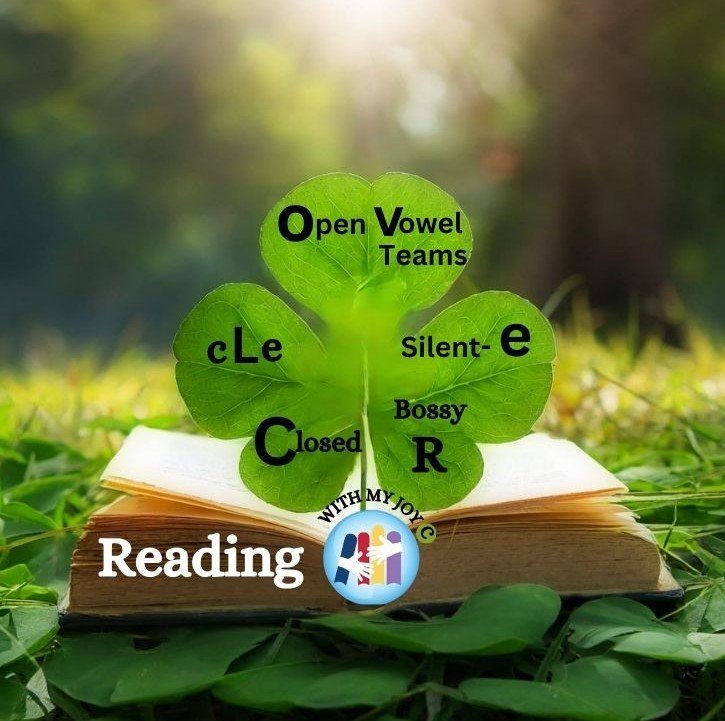
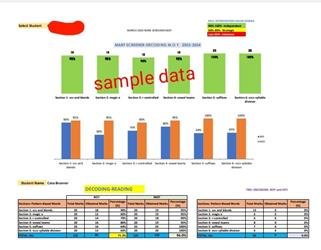
C.L.O.V.E.R.- Syllable Screener Available starting April 2026.

Screening is available exclusively on Fridays

STARTING MID-APRIL 2026
Documentation provided:  Each screener includes a printable score card and a concise report to help interpret results and guide instruction.

C.L.O.V.E.R. is the name of the screener and a mnemonic representing the six syllable types. The screener, developed by Reading with Ms. Joy, uses over 100 carefully selected real and nonsense words to evaluate students’ mastery of these foundational patterns. While the word list is original, the screener is informed by Smartt & Glaser’s (2010) evidence-based framework—a structured literacy model that emphasizes explicit instruction in syllable types, systematic practice, and effective decoding strategies.

Research shows that knowledge of these six syllable types enables readers to decode approximately 85% of English words (Reading Rockets, 2023). The word list focuses on regular sound–letter correspondences, which make up about 75–85% of the English writing system, as described by researchers like Louisa Moats. Irregular or ambiguous spellings are intentionally excluded to keep the focus on essential decoding skills.

The screener measures decoding accuracy using both real and nonsense words. Nonsense words ensure students rely on decoding skills rather than memory or guessing. It does not assess reading speed or fluency.

The score card includes a proprietary scoring system that provides percentile rankings by syllable type, helping identify which patterns may need more targeted support. Developed by Reading with Ms. Joy, this system offers clear, actionable feedback to inform instruction.

The importance of syllable type instruction is supported by major education organizations, including the National Education Association (NEA) and the International Dyslexia Association (IDA), which highlight the role of syllable types in effective reading instruction.

For more information, visit the IDA resource:
Effective Reading Instruction for Students with Dyslexia — International Dyslexia Association

READ MORE ABOUT CLOVER HERE

Screening Cancellation and Rescheduling Policy

Please be mindful of your appointment and cancel only if absolutely necessary. Each booking is a commitment to attend the session.

Thank you for your understanding.

Subscribe to Reading With Ms. Joy

Stay up to date with everything important.