Online Structured Literacy Approach for Children with Reading Challenges, Including Dyslexia

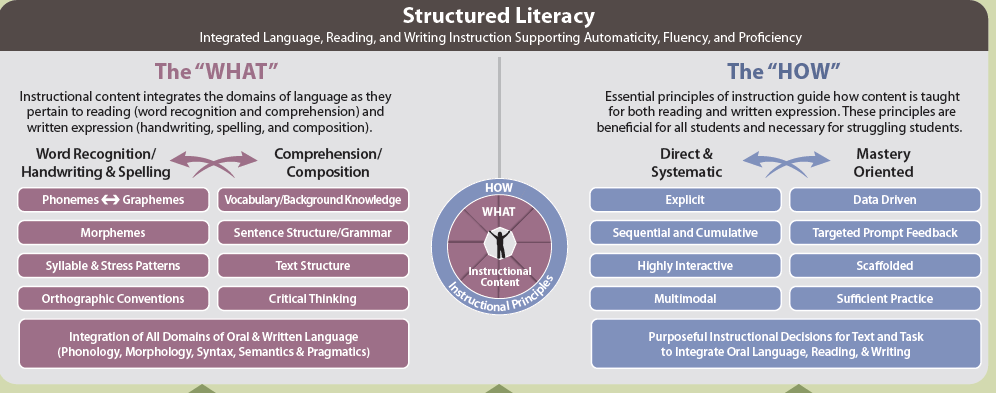
Structured Literacy

Structured Literacy:
What It Is, How it Works, and
Why It Matters

Children with Dyslexia are in nearly every classroom, but effective reading instruction is not.


What is Structured Literacy?

 
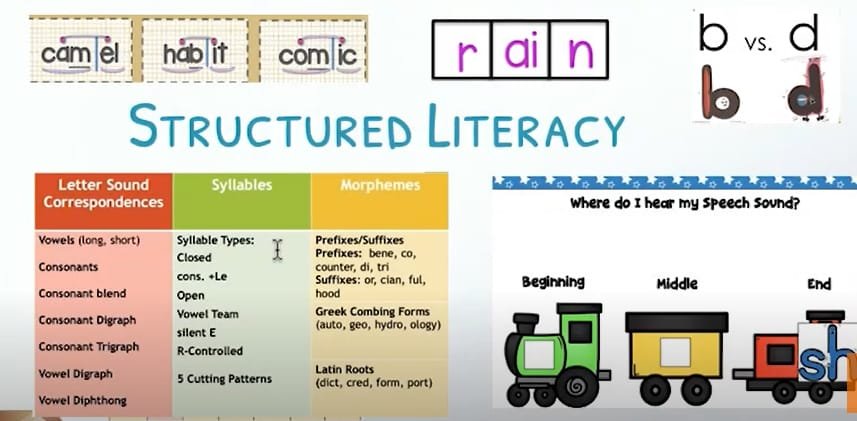
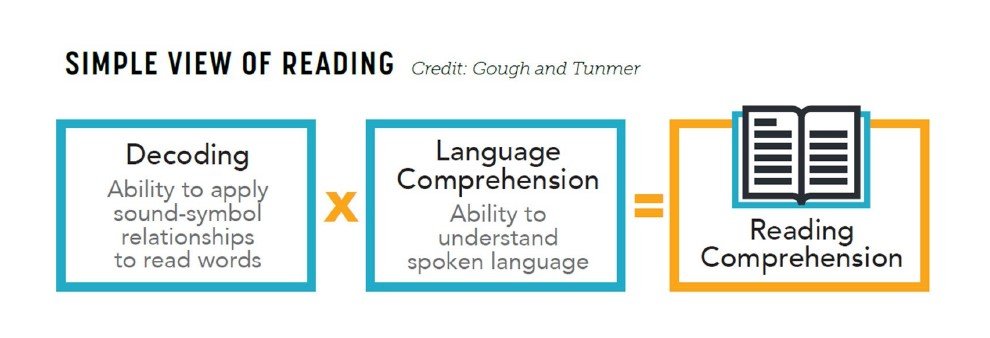
Structured Literacy (SL) is a highly effective approach to teaching reading and spelling that supports students who struggle with these skills. One of the most renowned SL approaches is the Orton-Gillingham (OG) method, a time-tested, research-based framework for literacy instruction. At the heart of Structured Literacy is a powerful research-based formula known as the Simple View of Reading, illustrated below. 
Every session is built on five core principles that guide how I teach and how your child learns:
Diagnostic: Understands each student’s needs.
Explicit: Clear and direct instruction.
Systematic: Step-by-step process.
Cumulative: Builds on what’s learned.
Multisensory: Engages multiple senses for learning.

Each session is structured, personalized, and multisensory. I work at your child’s pace, focusing on real skill building, growing confidence, and ensuring every session ends with a sense of achievement.

Structured Literacy is beneficial for both students at risk for reading difficulties and those with reading disabilities. It offers a consistent, effective framework for building foundational literacy skills. Here’s why SL is crucial:
  1. Evidence-Based Instruction: Structured Literacy is supported by research and has been proven to help students develop essential reading and writing skills.
  2. Comprehensive Skill Development: SL approaches provide systematic instruction in all aspects of literacy, including phonemic awareness, phonics, fluency, vocabulary, and comprehension.

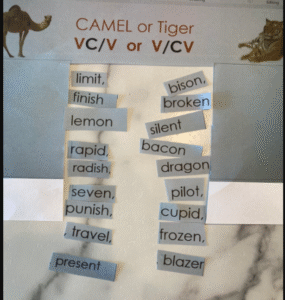
Spot the mistake

In Reading with Ms. Joy, students learn to divide and sort words using animal syllable division rules like CAMEL and TIGER. One word doesn’t follow the correct rule — can you find the mistake?

Play a Game!

Let’s turn learning into fun! This quick literacy game focuses on recognizing the vowel sound of ‘Y’.  Are you ready to test your skills?
Basic Facts About the English Writing System

English has 26 letters: 21 consonants and 5/6 vowels (Y can sometimes act as a vowel).

There are 44 distinct sounds represented by the 26 letters of the alphabet.

English uses 6 common syllable patterns for arranging vowels and consonants in words.

  • About 20% of English phonemes have predictable spellings.
  • 50% of words follow regular patterns.
  • 37% deviate by just one sound.-- Moats, 1995

Key Features of Structured Literacy

Structured Literacy approaches follow a systematic progression, teaching students one skill at a time. Skills are introduced in a logical sequence, ensuring that each new concept builds on previous knowledge. For example, students learn the sounds of letters before decoding words or sentences

Phonemic awareness is the ability to hear, identify, and manipulate individual sounds in spoken words. OG instruction includes activities like sound mapping, where students break down words into their phonemes (individual sounds) and segment them into sounds or syllables.

Students must master each reading skill before moving on to the next. This approach ensures a solid foundation for future learning.

Instruction Includes:

  • Immediate corrective feedback on decoding errors
  • Clear, helpful tips or prompts for decoding unknown words
  • Comprehension questions to assess understanding

Why Does Structured Literacy Include Decoding Nonsense Words?

Nonsense words are phonetically decodable but not real words.

For example, the nonsense word “paze” rhymes with “haze” and “maze.” Here’s why nonsense words are an essential part of SL instruction:

Nonsense words help assess if students understand letter-sound correspondences and can apply these skills to unfamiliar words. They ensure that students are not just memorizing words but actually learning to decode.

By using nonsense words, we can find out if you know the most common sound for letters and if you can blend the sounds to read words you have never seen before.   -Reading Rockets.                                

Nonsense word measures are one part of DIBELS, a widely-used assessment for young children, and are an integral part of the Orton-Gillingham approach to teaching reading. 

Subscribe to Reading With Ms. Joy

Stay up to date with everything important.